New Card Enables Contractors Across Emerging Markets to Spend Stablecoin Earnings Like Traditional Currency
By Financial Technology Frontiers (FTF) Editorial Team
Executive Summary: The promise of stablecoins has long centered on faster payments, lower transfer costs, and greater financial accessibility. Yet one challenge has persisted: while receiving and holding stablecoins has become increasingly straightforward, spending them in everyday commerce has remained considerably more complex. That gap is now being addressed through a new partnership between Stripe and Deel.
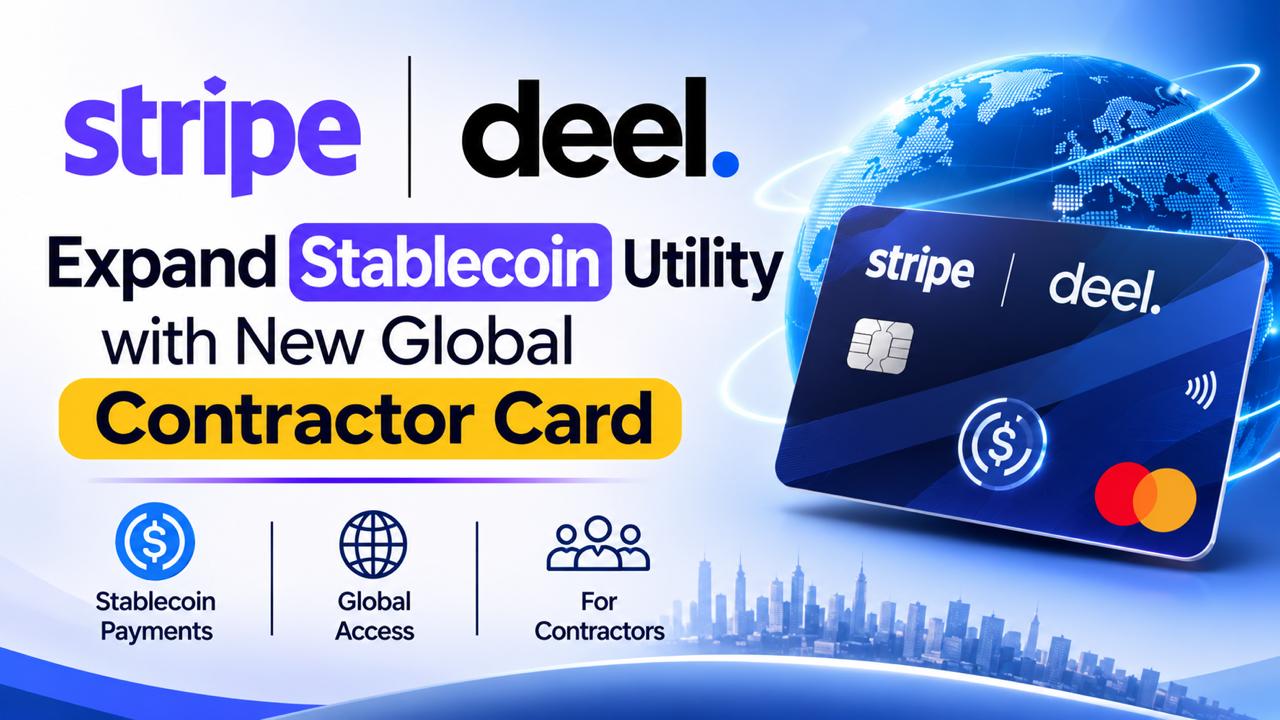
On November 24, 2026, Stripe announced that Deel—the global payroll and HR platform serving more than 40,000 businesses across over 150 countries—is using Stripe Issuing to power the new Deel Card. The card enables contractors to spend balances held in stablecoins as easily as traditional fiat currency while earning cashback and accessing travel and purchase protection benefits. The solution is being launched across 26 markets in Latin America, the Caribbean, and Africa.
The announcement represents another important step in the ongoing convergence of traditional payment infrastructure and digital assets, bringing stablecoins closer to everyday consumer and business use cases.
Bridging the Gap Between Earning and Spending
For many independent contractors and remote workers, stablecoins have become an increasingly attractive way to receive payments, particularly in regions where local currencies face volatility or where cross-border transfers remain expensive and slow.
Through Deel’s platform, contractors can:
- Receive payments from employers globally.
- Convert balances into DLUSD, Deel’s U.S. dollar-denominated custom stablecoin.
- Hold those balances within a stablecoin wallet.
- Earn rewards on eligible balances.
- Spend funds directly using the new Deel Card.
According to Thierry Edde, Head of Crypto at Deel, contractors have already stored more than $45 million in Deel’s stablecoin wallet ecosystem since its launch in June 2026. The introduction of the card removes the need for many users to transfer assets between multiple applications, exchanges, or financial institutions before making purchases.
“Today, we’re giving them a way to spend it with the new Deel Card. That means contractors can hold, earn, and now spend, all on Deel. There’s no more moving money between apps and losing time, fees, and value along the way.”
— Thierry Edde, Head of Crypto, Deel
Stripe’s Growing Stablecoin Infrastructure Strategy
The new card builds on a broader stablecoin strategy that Stripe has been steadily expanding over the past two years. The solution combines multiple components of Stripe’s emerging digital-asset ecosystem, including:
- Stripe Issuing for card infrastructure.
- Bridge for stablecoin issuance.
- Privy for wallet functionality.
- Integrated payment processing and settlement capabilities.
According to Henri Stern, Head of Crypto and Stablecoins at Stripe, the objective is to make stablecoins as usable as traditional forms of money.
“Stablecoins should be as easy to spend as any money you’ve ever held. Stripe’s stablecoin stack already helped contractors hold stablecoins with Deel, and we’re thrilled to now enable them to spend their earnings on everyday purchases, anywhere a card is accepted.”
— Henri Stern, Head of Crypto and Stablecoins, Stripe
The announcement further illustrates Stripe’s ambition to position itself not simply as a payment processor, but as a broader financial infrastructure provider for both traditional and blockchain-native payment ecosystems.
Privacy Becomes a Differentiator
One of the more notable aspects of the announcement concerns privacy. While many blockchain-based transactions are visible on public ledgers, Deel has emphasized that contractor balances and payment activity remain private.
This capability is enabled through Privy’s integration with Tempo Zones, which creates environments where wallet visibility is restricted to:
- The individual contractor.
- Deel as the operator of the Zone.
Transaction activity is therefore not broadly viewable by the public despite the underlying stablecoin infrastructure. For many businesses and professionals, this addresses one of the more frequently cited concerns associated with public blockchain systems: the visibility of financial activity.
Why Emerging Markets Matter
The initial rollout spans 26 countries across Latin America, the Caribbean, and Africa. These regions have often been among the earliest adopters of stablecoins due to factors such as:
- Currency volatility.
- Cross-border employment growth.
- Remittance demand.
- Limited access to traditional banking infrastructure.
- High international payment costs.
For globally distributed workforces, stablecoins offer a mechanism for preserving value, reducing transfer friction, and accelerating settlement timelines. The Deel Card extends this utility beyond receiving and storing funds by allowing contractors to spend digital-dollar balances directly through existing card acceptance infrastructure.
The Broader Evolution of Stablecoins
The launch arrives amid growing industry momentum around stablecoin adoption. Over the past year, major financial institutions, payment networks, and fintech providers have increasingly moved beyond pilot programs toward real-world implementations involving:
- Payroll.
- Merchant payments.
- Cross-border transfers.
- Treasury operations.
- Consumer spending.
Rather than replacing traditional payment systems, many of the newest initiatives seek to integrate digital assets within existing infrastructure, making blockchain technology largely invisible to end users. The Deel Card reflects this trend: users interact with a familiar payment card experience while the digital-asset infrastructure operates behind the scenes.
FTF Editorial Analysis
The significance of the Stripe-Deel partnership extends beyond the launch of another fintech payment card. For years, stablecoin innovation has focused largely on how users acquire, store, and transfer digital assets. The missing piece has been practical spendability. By enabling contractors to receive income, hold value, and make everyday purchases within a single ecosystem, Stripe and Deel are helping move stablecoins closer to functioning as usable financial instruments rather than merely digital settlement mechanisms.
Equally important is the decision to launch first across Latin America, the Caribbean, and Africa—regions where demand for efficient cross-border payments and stable access to U.S. dollar-denominated value is often strongest. The initiative also reflects a broader industry trend in which blockchain technology is becoming increasingly abstracted from the user experience. Consumers are not being asked to become cryptocurrency experts; instead, they are being offered familiar financial products powered by digital-asset infrastructure operating behind the scenes.
If this model proves successful, it may offer an early glimpse into how stablecoins ultimately achieve mainstream adoption—not through speculative use cases, but through seamless integration into everyday financial activities.