
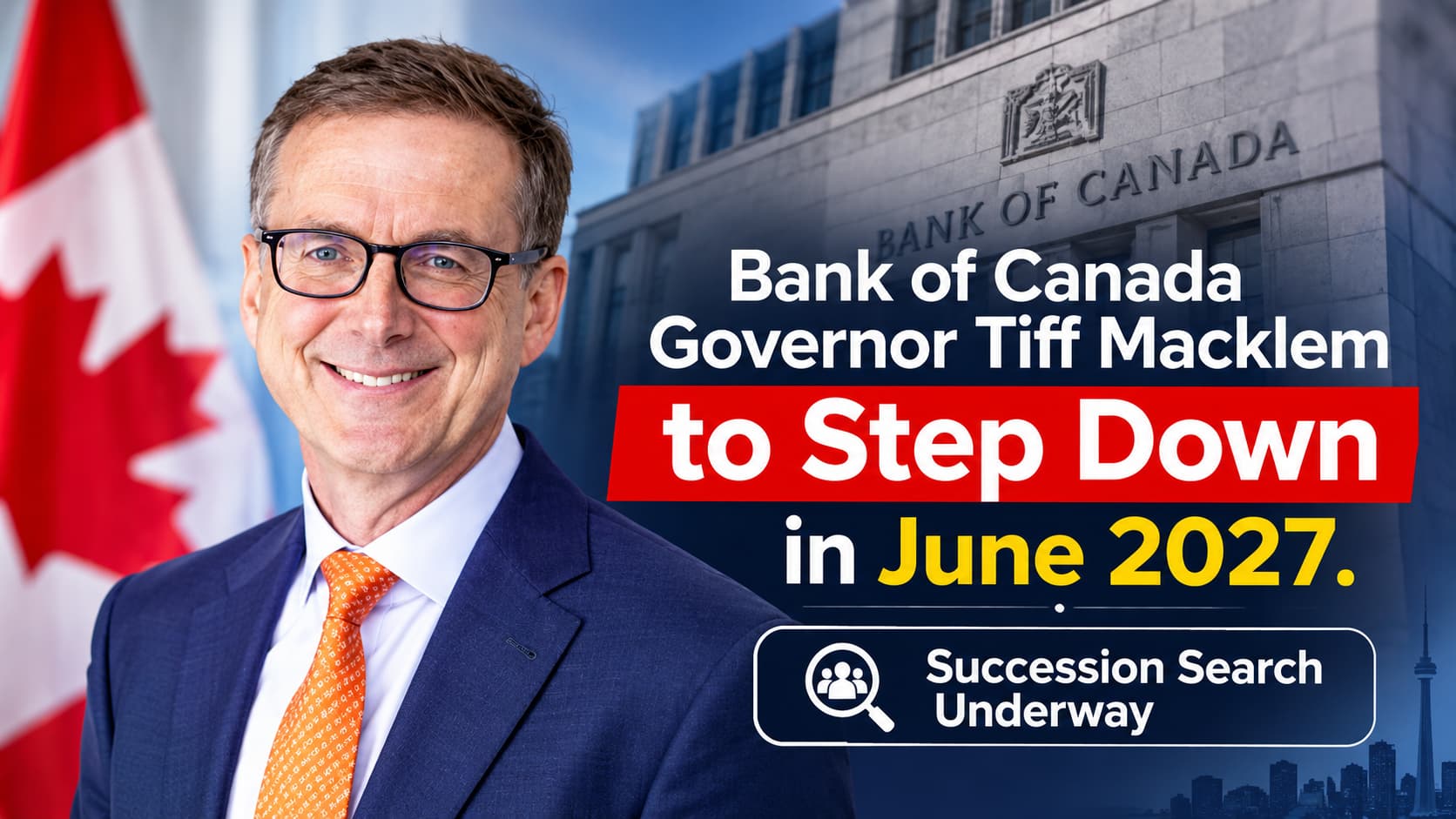
Reflecting on his tenure, Tiff Macklem, the 10th Governor of the Bank of Canada, emphasized the challenges that defined his term, including heightened global uncertainty and an increasingly fragmented economic landscape.
“It has been the highlight of my career to serve as the 10th Governor of the Bank of Canada,” Macklem said. “My time as Governor has seen Canada navigate a more fragmented, shock-prone world. The Bank has faced these challenges by acting decisively, by using sound judgment in the face of uncertainty, and by serving Canadians with humility and a steadfast commitment to its mandate.”
The Governor also expressed gratitude to the Bank of Canada Board of Directors, the federal government and Canadians for the opportunity to lead the country’s central bank.
“It is a privilege to serve as Governor, and I remain fully committed to fulfilling my responsibilities and delivering for Canadians through the remainder of my term.”
Succession Process Begins
To identify a successor, the independent directors of the Bank of Canada Board have formed a dedicated Search Committee tasked with overseeing the recruitment process. The Committee will be supported by global executive search firm Egon Zehnder, which has been retained to assist in identifying and evaluating candidates for the role.
According to the Bank, the recruitment process is expected to conclude during the spring of 2027. Following completion of the search, the Board’s independent directors will appoint the next Governor, subject to approval by the Minister of Finance and the federal Cabinet. The successful candidate will begin a seven-year term on June 3, 2027.
Why the Transition Matters
Leadership changes at central banks are closely watched by financial markets, policymakers and industry participants because they often provide insight into the future direction of monetary policy, inflation management and financial stability priorities.
The timing of the transition is particularly significant as central banks globally continue to respond to evolving economic conditions, geopolitical uncertainty, technological transformation in financial services and the long-term implications of changing trade and capital flows. While Macklem will remain fully engaged through the end of his term, attention is likely to turn increasingly toward the qualities, experience and strategic priorities that Canada’s next central bank governor may bring to the role.
For Canada’s financial sector, the appointment will represent more than a leadership transition. It will help shape the stewardship of monetary policy and financial system confidence for the next decade.
Source: Bank of Canada, “Governor Tiff Macklem to Step Down in June 2027”.