
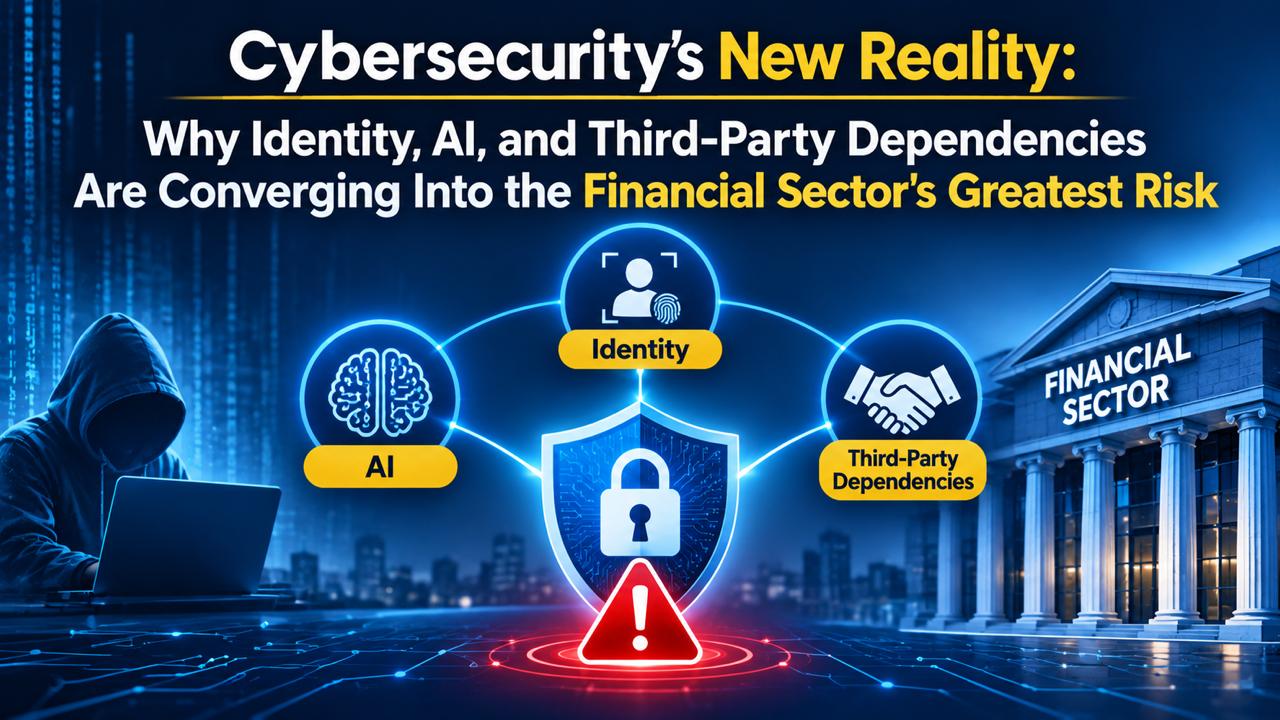
The reported compromise of 1Password illustrates how security infrastructure itself has become a primary target. Organizations increasingly rely on password managers, identity providers, cloud platforms, privileged access solutions, and security monitoring tools to protect critical assets. Yet these tools have also become attractive targets because compromising a single trusted provider can potentially create downstream exposure across thousands of organizations. The issue is no longer simply protecting credentials. It is managing concentration risk within the cybersecurity supply chain itself.
The reported cyber incident affecting FinCEN reinforces a similar lesson. Financial institutions depend heavily on a broader ecosystem of regulators, intelligence-sharing organizations, payment networks, service providers, cloud platforms, and telecommunications companies. As these interconnected relationships deepen, cyber incidents occurring outside the institution can rapidly evolve into operational, regulatory, or reputational risks within it. Financial resilience is no longer determined solely by internal controls. It increasingly depends on the resilience of the surrounding ecosystem.
At the same time, reports of successful AI-assisted cyberattacks suggest the cybersecurity industry may be entering a new phase. For years, security professionals discussed artificial intelligence primarily as a future threat. Today, AI is already being used to automate reconnaissance, generate sophisticated phishing content, identify vulnerabilities, optimize attack paths, and support malware development. What once required highly specialized expertise can now be accelerated by machine learning and generative AI technologies.
Historically, advanced cyberattacks were limited by the availability of highly skilled threat actors. AI is beginning to remove that constraint. As offensive capabilities become more accessible, attackers can scale operations faster, target more organizations simultaneously, and adapt more quickly to defensive measures. The result is a threat environment where the barriers to entry continue to decline while potential impact continues to increase.
Taken together, these developments reveal four emerging risks that every financial institution should be watching closely.
First, identity has become the new perimeter. Compromised accounts, privileged credentials, and trusted identities increasingly provide attackers with easier access than traditional network intrusions.
Second, third-party concentration risk is becoming a cybersecurity issue. As organizations depend upon a smaller number of critical providers, a single compromise can have disproportionate systemic consequences.
Third, digital interconnectivity is amplifying operational risk. Cyber incidents affecting infrastructure providers, regulators, utilities, and technology vendors can quickly become financial-sector events.
Fourth, artificial intelligence is accelerating offensive cyber capabilities. Attackers are beginning to operate at machine speed, reducing the time available for defenders to detect and respond.
For Canadian financial institutions, these trends strongly reinforce the direction of recent regulatory initiatives focused on operational resilience, third-party risk management, technology governance, and cyber resilience. The challenge facing organizations is no longer simply preventing cyberattacks. It is understanding how cyber risk flows through ecosystems, dependencies, identities, and increasingly autonomous technologies.