
But as AI adoption accelerates, a more fundamental question is emerging. The question is no longer simply “Can we use AI?” It is whether organizations can use AI responsibly, securely and resiliently at scale.
As AI systems become increasingly sophisticated, interconnected and autonomous, they introduce new vulnerabilities and expand the enterprise attack surface. What happens when an AI system or solution is manipulated, impersonated, poisoned, stolen, compromised or simply goes wrong?
The consequences can extend beyond technology failures, potentially affecting customer trust, data privacy, intellectual property, regulatory compliance, business continuity and organizational resilience.
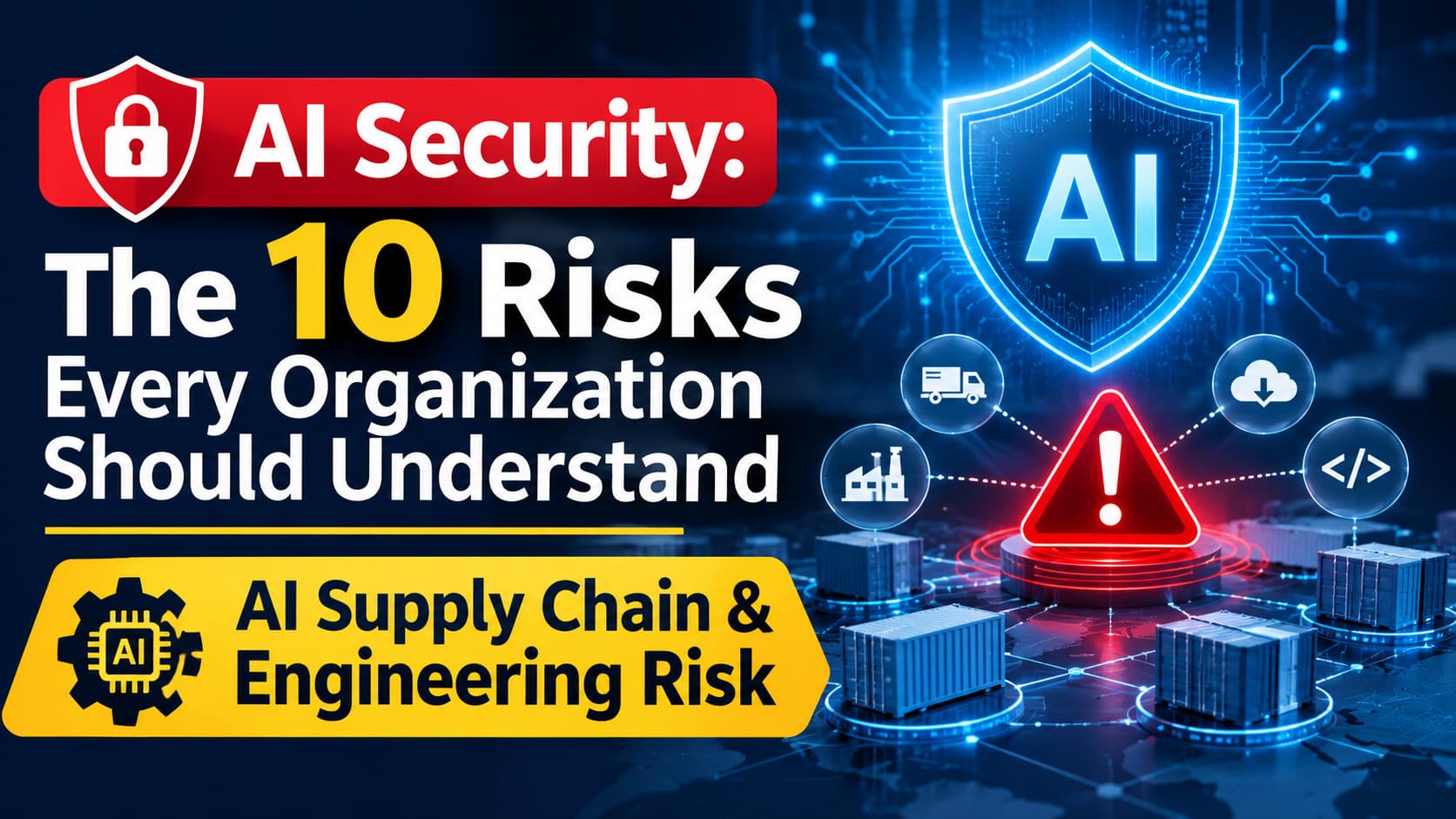
Financial Technology Frontiers (FTF), through its 10-Part AI Security Risks Series, examines the ten key AI Security Risks highlighted by the Canadian Centre for Cyber Security (CCCS).
Going beyond technical definitions, the series explores each risk through four essential dimensions, helping professionals connect cybersecurity threats with their real-world organizational implications.
|
01 / IDENTIFY
WHAT?
Understand the nature of each AI security risk, what it involves and why it matters to organizations.
|
02 / EXPLORE
HOW?
Examine how threats emerge, how AI systems can be exploited and where vulnerabilities may exist.
|
|
03 / ASSESS
IMPACT
Evaluate the potential business, operational, financial, regulatory and reputational consequences.
|
04 / RESPOND
CONTROL
Discover practical safeguards, governance measures and mitigation strategies to manage exposure.
|
AI security is no longer exclusively an IT or cybersecurity concern. It is becoming a broader enterprise governance and risk management priority.
Consider the emergence of Shadow AI, where employees independently adopt AI-powered tools, chatbots, coding assistants and productivity applications outside established organizational governance and security processes.
While these tools may improve productivity, they can also expose confidential documents, customer information, financial records, proprietary knowledge and intellectual property to external AI platforms.
Organizations often focus on governing the AI systems they formally approve. However, independently adopted tools and services can operate beyond established security, privacy and oversight frameworks.
This series is designed for professionals responsible for shaping, implementing, securing and governing AI adoption across organizations.
| ● Business Leaders & C-Suite Executives | ● Chief Information Officers (CIOs) |
| ● Chief Technology Officers (CTOs) | ● Chief Information Security Officers (CISOs) |
| ● Risk Management Professionals | ● Compliance & Governance Teams |
| ● Cybersecurity Professionals | ● AI, Data & Technology Leaders |
| ● Financial Institutions & Fintechs | ● Technology Service Providers |
At Financial Technology Frontiers, we believe that responsible AI adoption requires more than technological innovation. It requires a clear understanding of emerging threats, effective governance, informed decision-making and organizational accountability.
Through this series, FTF aims to equip business and technology leaders with practical perspectives to recognize AI-related vulnerabilities, assess their potential consequences and strengthen their organization’s ability to adopt AI securely and confidently.
The objective is to encourage a more informed approach to AI risk, where security and resilience are considered integral to innovation rather than afterthoughts.
Explore FTF’s perspectives on the evolving AI security landscape and discover why responsible AI adoption must begin with understanding the risks.