
 Desjardins survey of nearly 4,000 Canadians highlights the combined pressures of distraction, fatigue, stress and risky behaviour on the road.
A new national survey from Desjardins Insurance suggests Canadian drivers are facing an increasingly demanding road environment, with distraction, stress, fatigue and exposure to risky behaviour all shaping how motorists experience the roads.
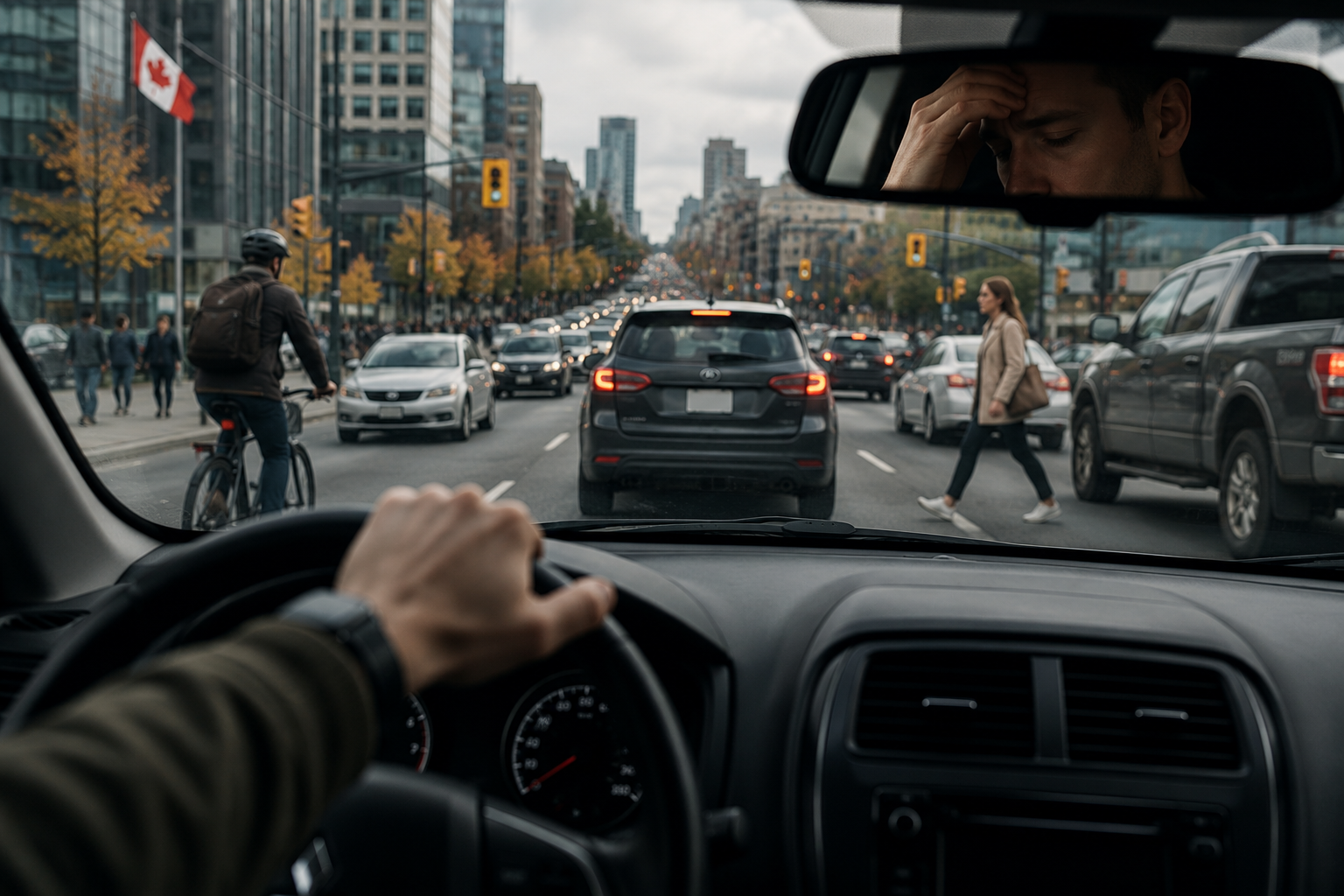
The 2026 survey, conducted among nearly 4,000 Canadians, found that distracted driving remains one of the country’s leading road safety concerns, with 60% of respondents ranking it among the top risks. However, the sources of distraction extend beyond smartphones and in–car technology.
External activity – including traffic, pedestrians and events outside the vehicle – was identified as the leading source of distraction by 35% of respondents. Cellphone–related distractions followed at 32%, while 26% cited in–vehicle technology and 22% pointed to everyday activities such as eating or drinking.
The survey also points to the pressure many Canadians experience before and during their journeys.
Nearly half of respondents, 49%, said they frequently feel stressed or tired. Desjardins said these conditions can affect focus, reaction time and decision–making, emphasizing the importance of planning ahead and taking breaks on longer drives.
Risky behaviour on the roads remains another concern. Sixty–eight per cent of respondents said they frequently witness aggressive driving. Meanwhile, 19% reported seeing alcohol–impaired driving and 24% reported seeing cannabis–impaired driving.
Speeding also illustrates a gap between recognizing risk and accepting risky behaviour. While 85% of respondents identified speeding as a major road–safety concern, 26% said exceeding the speed limit can be acceptable.
Valérie Lavoie, president and chief operating officer of Desjardins General Insurance Group, said road safety involves more than individual behaviour and requires greater awareness, education and measures that help reduce risk.
Overall, the findings suggest that Canadian road safety is shaped by overlapping pressures rather than a single problem. The survey captures drivers’ reported experiences and perceptions; it does not establish that these factors directly cause collisions.
Sources: